Articles · Accommodation
Sensory Profiles in the Workplace
Understanding how lighting, noise, temperature, and spatial design affect focus and wellbeing for neurodivergent professionals.

Shared Language editorial team
Published · 2 min read
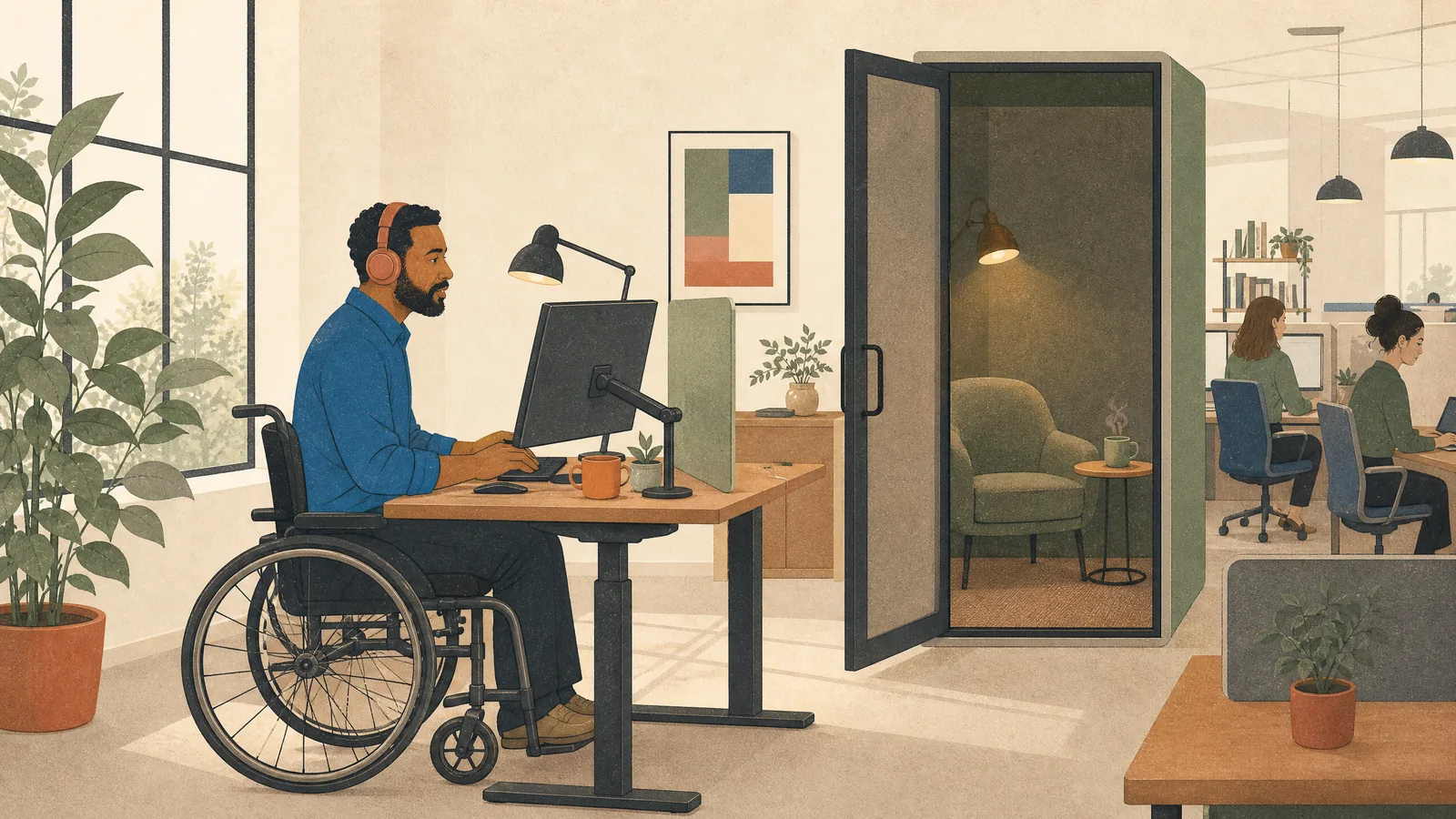
Sensory needs are real work factors
Sensory needs are often invisible, but they can strongly affect focus, energy, and mood.
Lighting, sound, temperature, smells, movement, and visual clutter can all create stress. For some people, a noisy office is not just annoying — it can make concentration nearly impossible.
Build a simple sensory profile
A sensory profile is a practical way to understand what helps or hurts someone’s ability to work.
- Do I focus better in quiet or with background noise?
- Does bright light drain me?
- Do interruptions make it hard to restart?
- Do I need movement to think clearly?
- Are there smells, sounds, or textures that overwhelm me?
Small supports can matter
Workplace supports can be simple and low-cost.
- Headphones
- Quieter seating
- Flexible desk location
- Remote focus time
- Reduced fluorescent lighting
- Meeting breaks
- Fewer surprise interruptions
Try this next
Identify one sensory drain and one practical adjustment that would reduce it.