Articles · Accommodation
Sensory-Friendly Work Does Not Have to Be Complicated
Low-cost ways to reduce sensory friction at work.

Shared Language editorial team
Published · Updated · 2 min read
Why this matters
Small sensory changes can make a major difference.
Simple supports
Start with practical options.
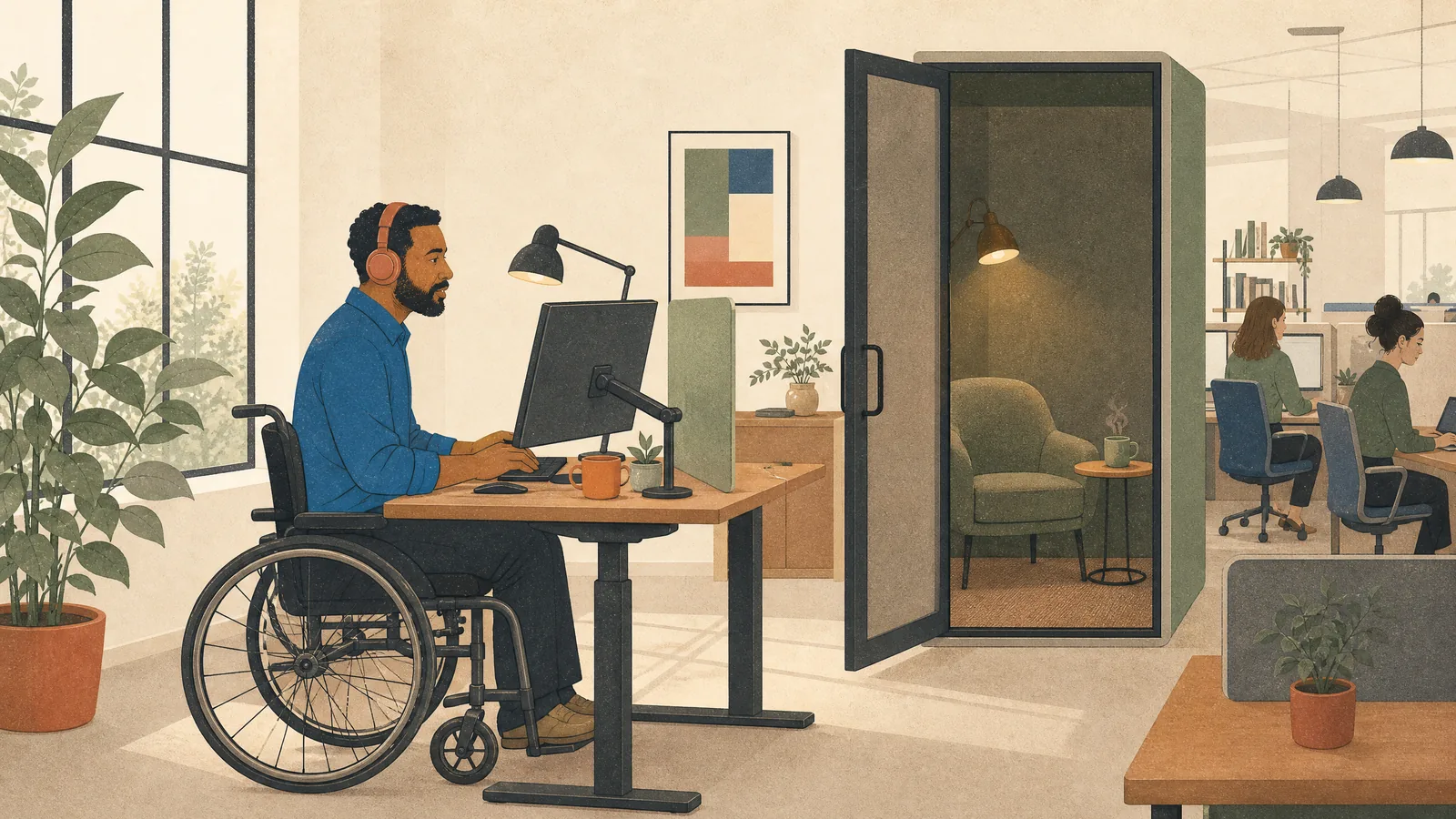
- Headphones
- Quiet rooms
- Reduced glare
- Flexible seating
- Remote focus time
- Predictable quiet hours
Start with a concrete barrier
Ask which feature of the environment is affecting a particular task. A person might describe glare on a screen, nearby conversations during reading, or a strong scent in a shared room. Their answer is more useful than guessing what a neurodivergent person is likely to need. Preferences can differ, including between people with the same diagnosis.
Offer a choice where possible
A different seat, a quieter space for a specific task, or advance notice of a noisy activity may be worth trying. Check safety, access, and the needs of others before changing shared equipment or conditions. For example, headphones may not be suitable where someone must hear alarms or instructions; discuss an approved alternative rather than ignoring that requirement.
Review without making it intrusive
Agree on a time to ask whether the change made the task more workable. The person does not need to provide a detailed account of discomfort for every use of the support. If the first option does not help, consider what you learned about the barrier and try a different practical arrangement.
Try this next
Ask: What environmental change would make focus easier?