Articles · Leadership
Building a Neuro-Inclusive Team Culture
How leaders can create environments where cognitive diversity is valued and different working styles are supported by design.

Shared Language editorial team
Published · 2 min read
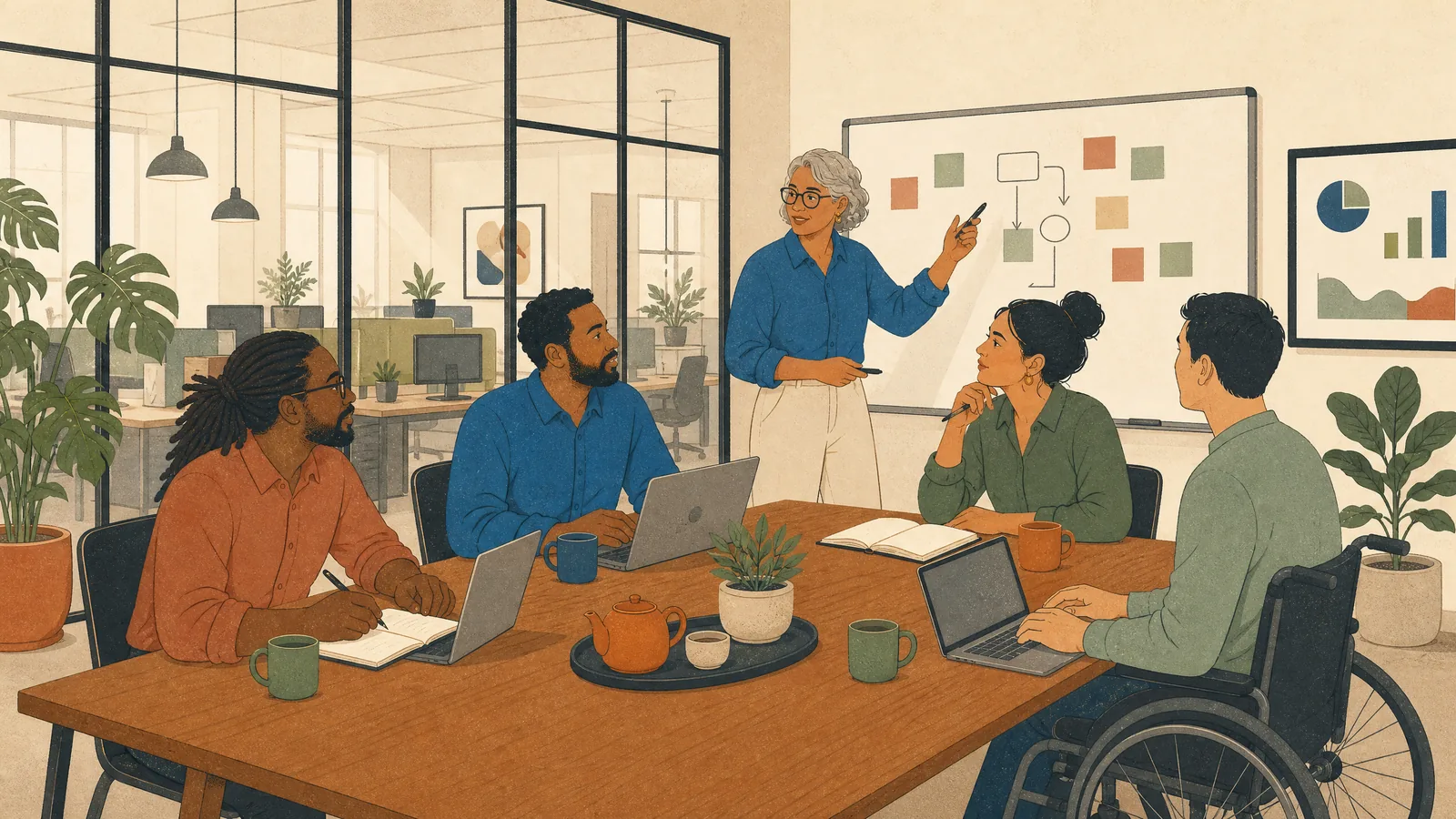
Inclusion is built into habits
A neuro-inclusive culture is not built by slogans. It is built by everyday habits that make different working styles easier to succeed in.
Many teams accidentally reward one type of brain: fast verbal processing, constant availability, comfort with ambiguity, and social confidence. That does not mean other employees are less capable. It means the workplace may be designed around a narrow idea of professionalism.
Make expectations visible
A more inclusive team reduces guesswork. Helpful practices include:
- Sending agendas before meetings
- Allowing written follow-up after discussions
- Documenting priorities and decisions
- Giving people options for communication style
- Judging work by outcomes, not personality fit
Managers do not need to diagnose
Managers do not need to become experts in every diagnosis. They need to reduce unnecessary friction and make the work clearer for more people.
The reframe
Are we measuring the work, or are we measuring how familiar someone’s working style feels to us?
Try this next
Pick one recurring meeting and add three things: agenda, decision notes, and a written follow-up option.